
“In children’s books, I love the ratio between imagination and truth”: Author Oren Lavie on TRUMAN TOAD & THE QUEST FOR THE PERFECT HUG
Today is publication day for Truman Toad and the Quest for the Perfect Hug, in which a self-important but lovable toad tries to find the other half of the hug of his dreams. To celebrate, we had the great pleasure of interviewing author Oren Lavie, who wrote to us about how humor is like a sneeze, the soul of childhood, imagination and truth in storytelling, and making children laugh—and ask questions!
ELB: Do you have a favorite picture book as an adult?
OL: My top three, always, are Winnie-the-Pooh, Alice in Wonderland, and Peter Pan. And now I realize that all three are about the immense difficulty of growing up.
I love the hierarchy in Pooh, where the ultimate authority on anything is a six-year-old boy. He can read! And we meet Pooh and the gang exactly at the period when Christopher Robin is going to outgrow the forest and probably never return. He’s just going to become too sensible for that world. It’s heartbreaking. That forest is the childhood he’ll leave behind, with all its idiosyncrasies. I always get very sad and anxious toward the end of The House at Pooh Corner, for I know I’ll be asked to take sides.
With Peter Pan, it’s different. I start to cry in the first paragraph of page one. I’m a sucker for Wendy. She is us, the reader. We can never be Peter, and as the book goes on, we realize we don’t really want to be. And that’s a very important and unimaginably sad understanding. Because we understand that being normal and emotionally balanced is really the way to go. And that, unfortunately, means no flying.
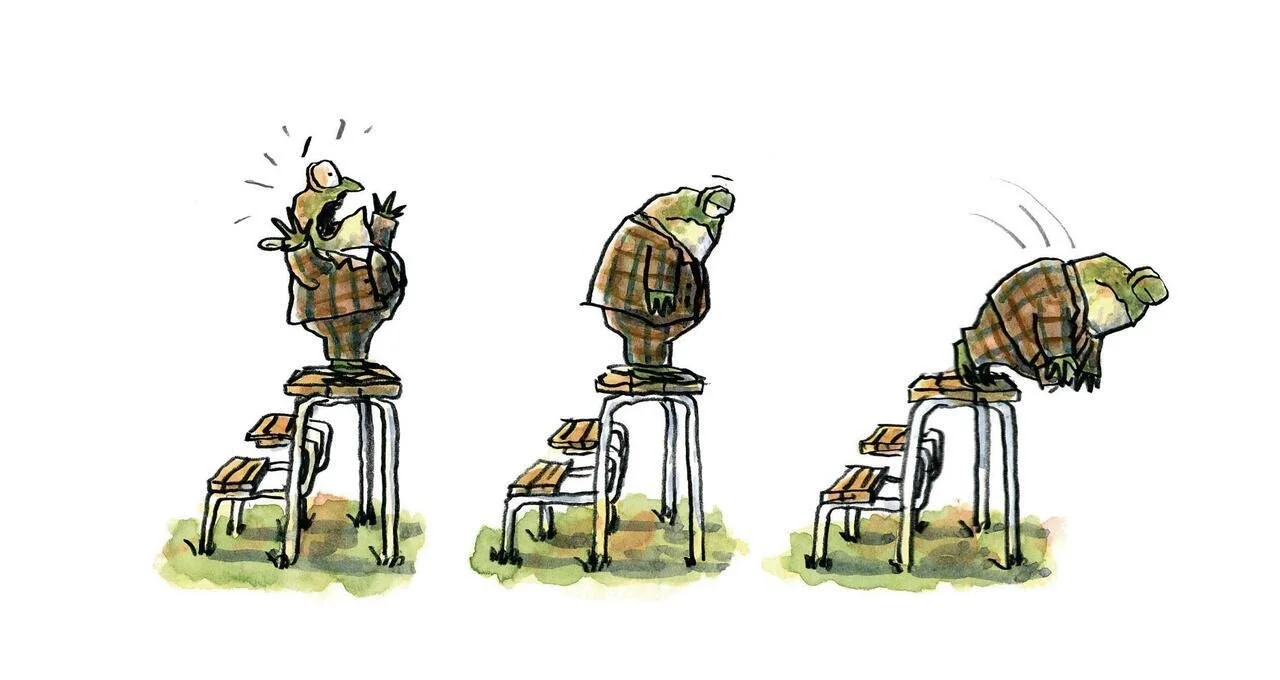
Alice is just nuts. Nuttier than everyone around her, if you ask me. Or maybe more “stubborn” is the better word. But they are pretty close words in my point of view. Truman is also very stubborn. But he is not entirely nuts, for he can be broken. In the best way. He can be brought down from his tree.
ELB: Talk with us about humor. What is humor about for you?
OL: Unpredictability. Silly logic.
I love when a character, after carefully reviewing the available information, arrives at the worst possible conclusion and bases their actions on it.
I think laughter is an uncontrollable expression of the body, like a sneeze. You are never properly prepared for a sneeze; it’s always an unexpected and ill-timed intrusion. And I think laughter is a bit like that. It’s the mind spitting out stress that has accumulated in the system. And humor is the source of the stimulus that has unexpectedly caused that reaction. It’s associated for me with irrationality, either on the character’s side, or the situation.
ELB: When writing for children, do you think about childhood? In our own work, we think a lot about “the soul of childhood.” Does that mean anything to you? Is there something deep and true about childhood that we do well to try to preserve and carry with us?
OL: When I try to think what the “soul of childhood” might mean to me, it’s probably that to a child everything happens for the first time, all the time. So much new information is thrown at you. Literally everything is new information, and when you’re a child, you have very few tested methods to process all that information. And a lot of the explaining has to come from guessing, which is, in other words, imagining. So imagination is crucial for processing some parts of the world, as a child. Therefore, the sensitive kids, I think, those who have some difficulty with the world outside, turn to the world inside, to the imagination.
And I think that is a powerful tool, and maybe we can argue that this is what the soul of childhood is: the imaginative processing of a world unknown.
ELB: Truman, in his radicality and self-involvement, seems possessed by the spirit of childhood, if not manifesting its soul. Does that translate for you?
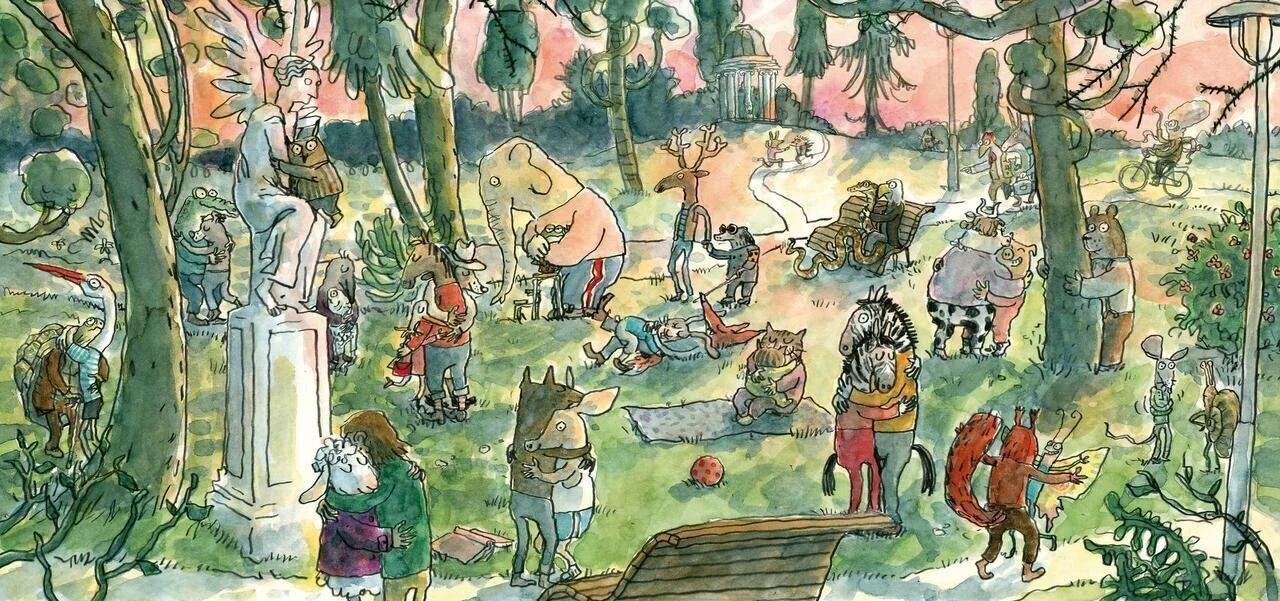
OL: I actually think of Truman as the typical adult. Worried, neurotic, trying to control his life and manipulate it to fit his needs. So that’s not a child’s mind, in my point of view. But that’s why I think, for a child, reading about a helpless adult like Truman can be so much fun, and a relief.
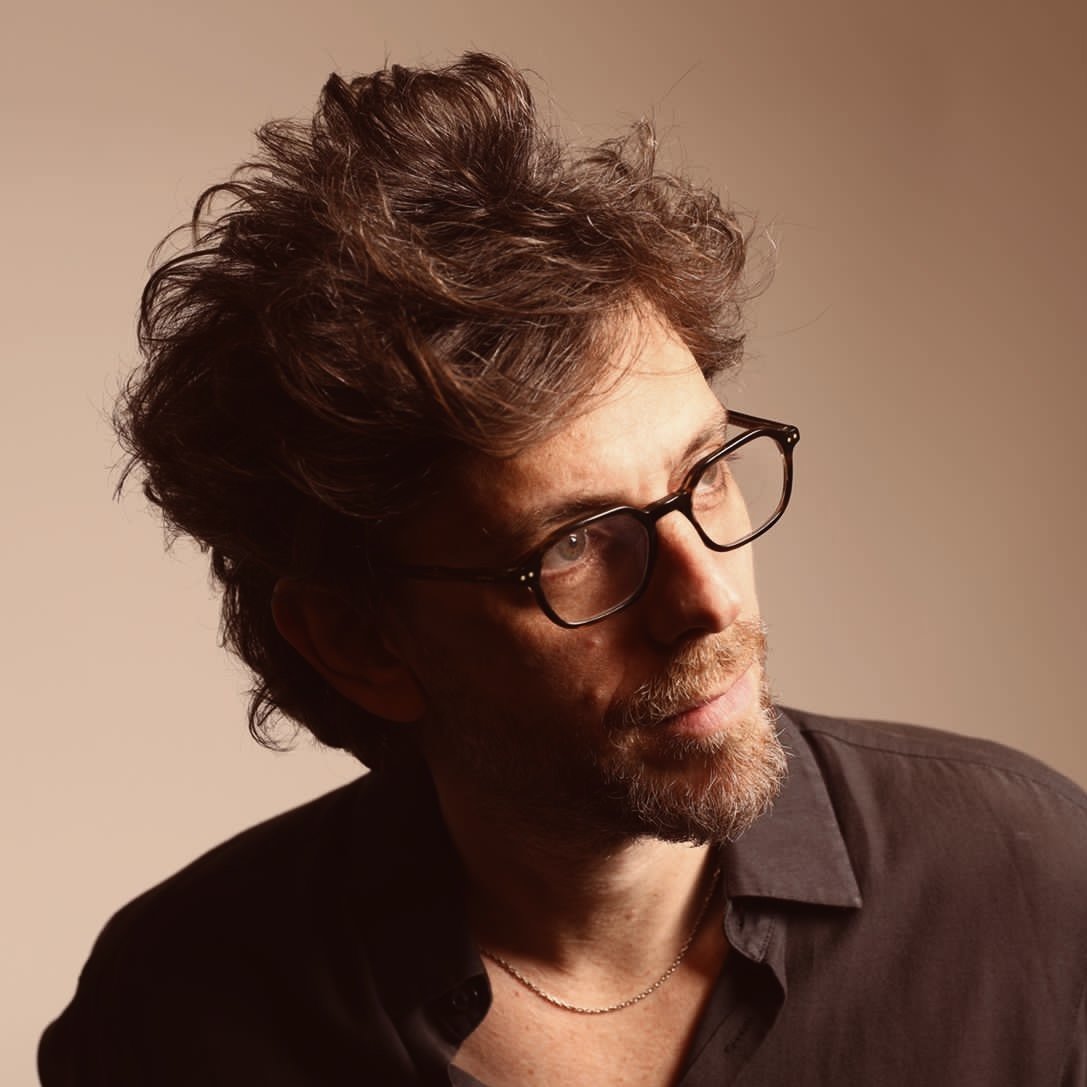
Photo credit: Noa Nir
ELB: You are an accomplished songwriter, author, and director. How did you come to write stories for children? And is there something unique about children’s books that called to you?
OL: In children’s books, I love the ratio between imagination and truth. You have to be truthful when you address children, and very simple. But you can do that using as many strange, new, wonderful worlds as you can invent. You can have people fly. So the metaphor is not just a metaphor, it is the actual story.
ELB: Several reviewers have compared Truman to other expressive animal characters from children’s literature classics, like Arnold Lobel’s Frog and Toad or William Steig’s Sylvester, Shrek, or Pearl. Who are the people (or the characters) in your life who inspired Truman?
OL: I think Truman is, unfortunately, me.
I often make silly, stubborn declarations and commit to them and force myself to live up to them.
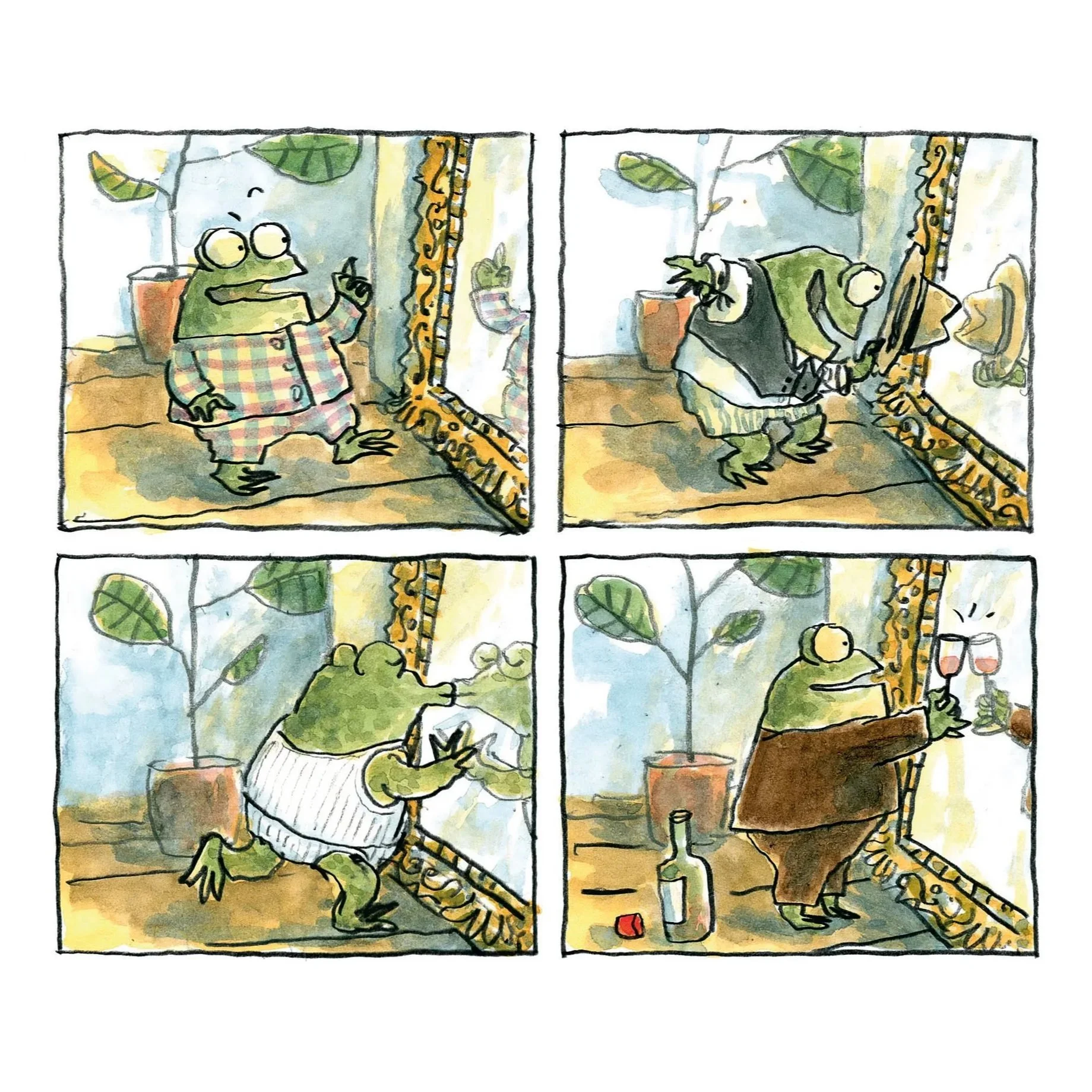
And I, too, do eventually love people, even though I always have to try to do it alone first. Like Truman carrying that hug alone and auditioning animals to fit into it. He wants then to live on his terms, he invites them into his hug, instead of being open to whatever new dynamic they might bring.
I also love toad picnics and talking out loud to my plants.
ELB: Truman Toad picks up on the same “playfully existential” tangent (O, The Oprah Magazine) of your previous picture book, The Bear Who Wasn’t There. What is it about this humorous yet profound tone that appeals to you, especially when it comes to children’s stories?
OL: I just like silliness. I like inappropriate characters who think they have figured things out, and are very stuck on it.
In The Bear Who Wasn’t There, almost every character the bear meets along the way presents a branch of philosophy. You have the Stoics and the existentialists, the Buddhists, all hidden inside the Lazy Lizard and the Convenience Cow and the Taxi Turtle. And the bear is taking it all in and then immediately forgetting.
ELB: Who are your biggest inspirations as a children’s author?
OL: I wish I could say nature. That would be great. Trees speak to me. But no, it’s usually art. In the presence of good art, I become excited, I feel infected, and I want to add to it.
So when I want to write a funny, emotional, quirky story, I go and read some. Those would be Salinger and Milne and Dahl and Kurt Vonnegut and Douglas Adams. Sometimes I’ll strike up a conversation in my head with one of these writers about a topic, and the way we would talk about it—and the way I’d be so smart with those deceased giants—would sometimes become a story idea, or a tone, or a new character. Without art around me, I forget why I should make it. So I always need to surround myself with it.
ELB: What do you hope to spark in readers with Truman Toad?
OL: I love making children laugh. If I do that, that’s enough.
And I love making them ask questions, too. If I make them ask, “Why this? So why this? And why this?” then I’m happy.
And now… Enchanted Lion’s rapid-fire questions!
What word do you love?
OL: “Penultimate.” When I learned there was a word in English for “one before last,” I couldn’t get over my excitement. We don’t have one in Hebrew.
What word do you hate?
OL: I don’t particularly enjoy the word “no.” That applies to all languages.
Do you have a life motto?
OL: I always try to make as much money as I can in my sleep. I insist on waking up richer than I went to bed. No doubt royalties from Truman Toad will take care of that.
What qualities do you most admire?
OL: Kindness. But also wit. If you’re very witty, I would forgive the occasional lack of kindness.
Do rituals make up a part of your creative process?
OL: If writing in coffee shops falls under the term ritual, then yes.
What does procrastination look like for you?
OL: Writing in coffee shops.
What is earthly happiness to you?
OL: An especially juicy burrata.
Where do you think we go after we die?
OL: Honestly, I never thought about death as a place, but wouldn’t it be nice if it were your favorite table in your favorite restaurant with your favorite person?

Written by Oren Lavie
Illustrated by Anke Kuhl
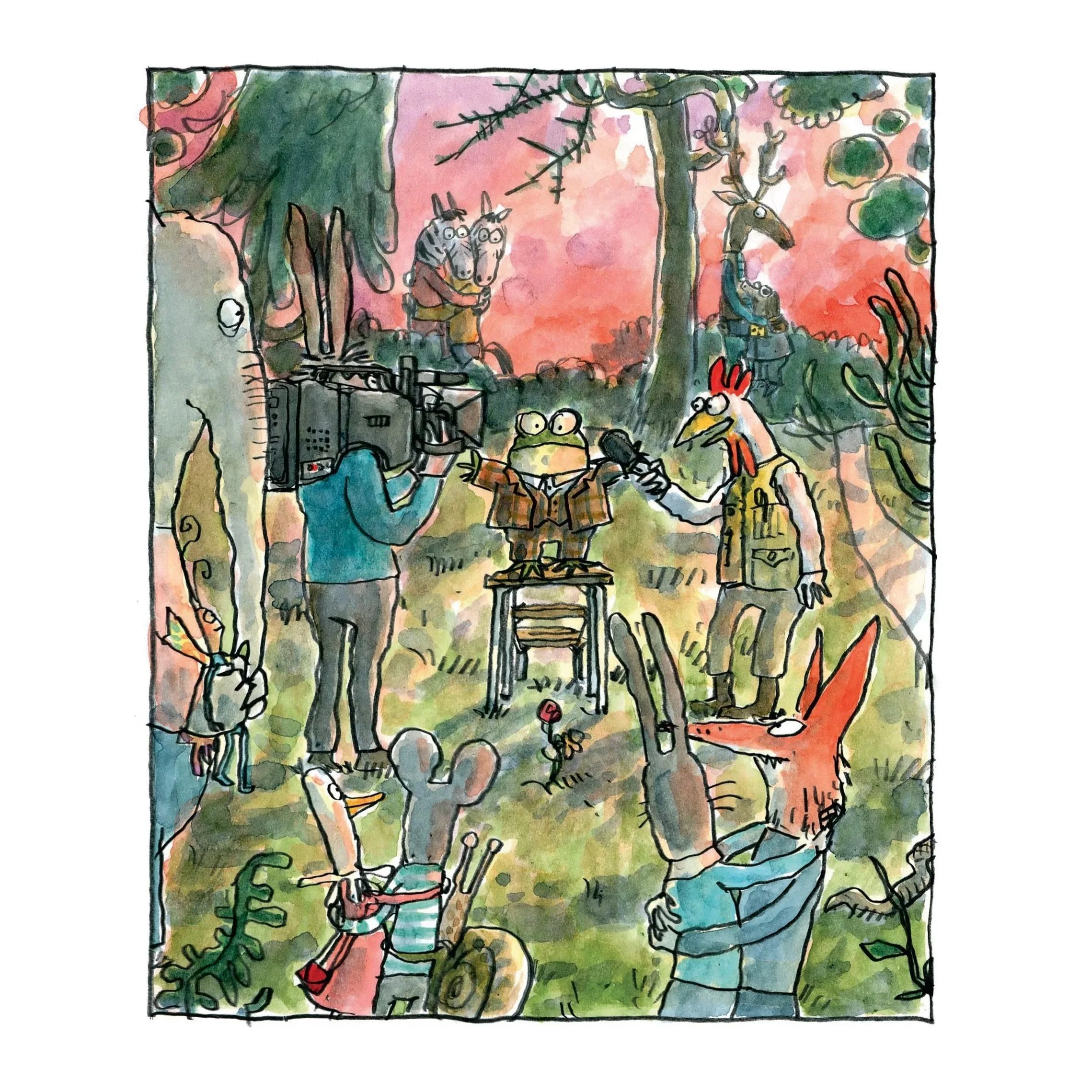
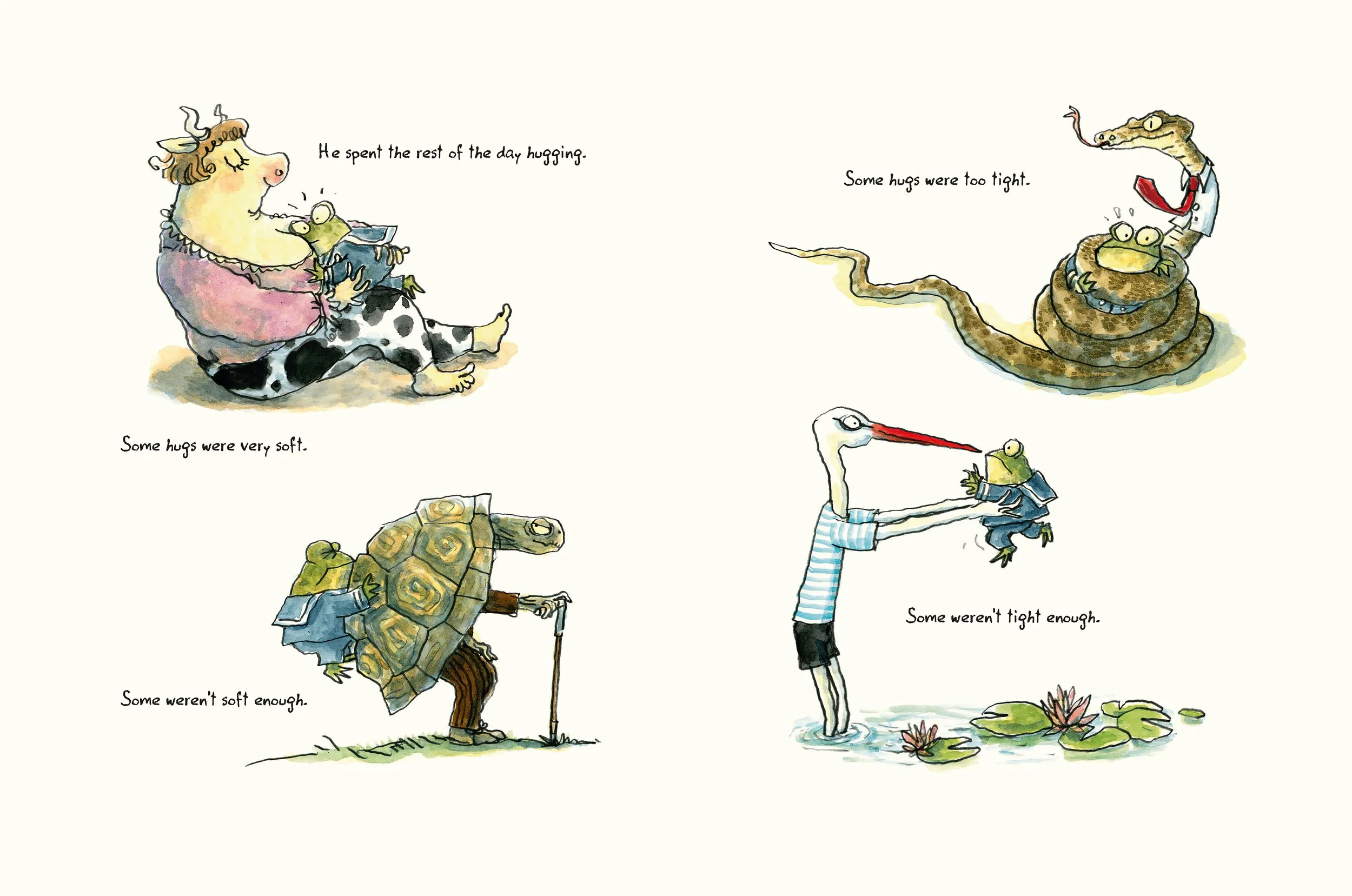
A self-important but good-hearted toad, with an ample amount of self-love, discovers his love for others in this entertaining and charming picture book!
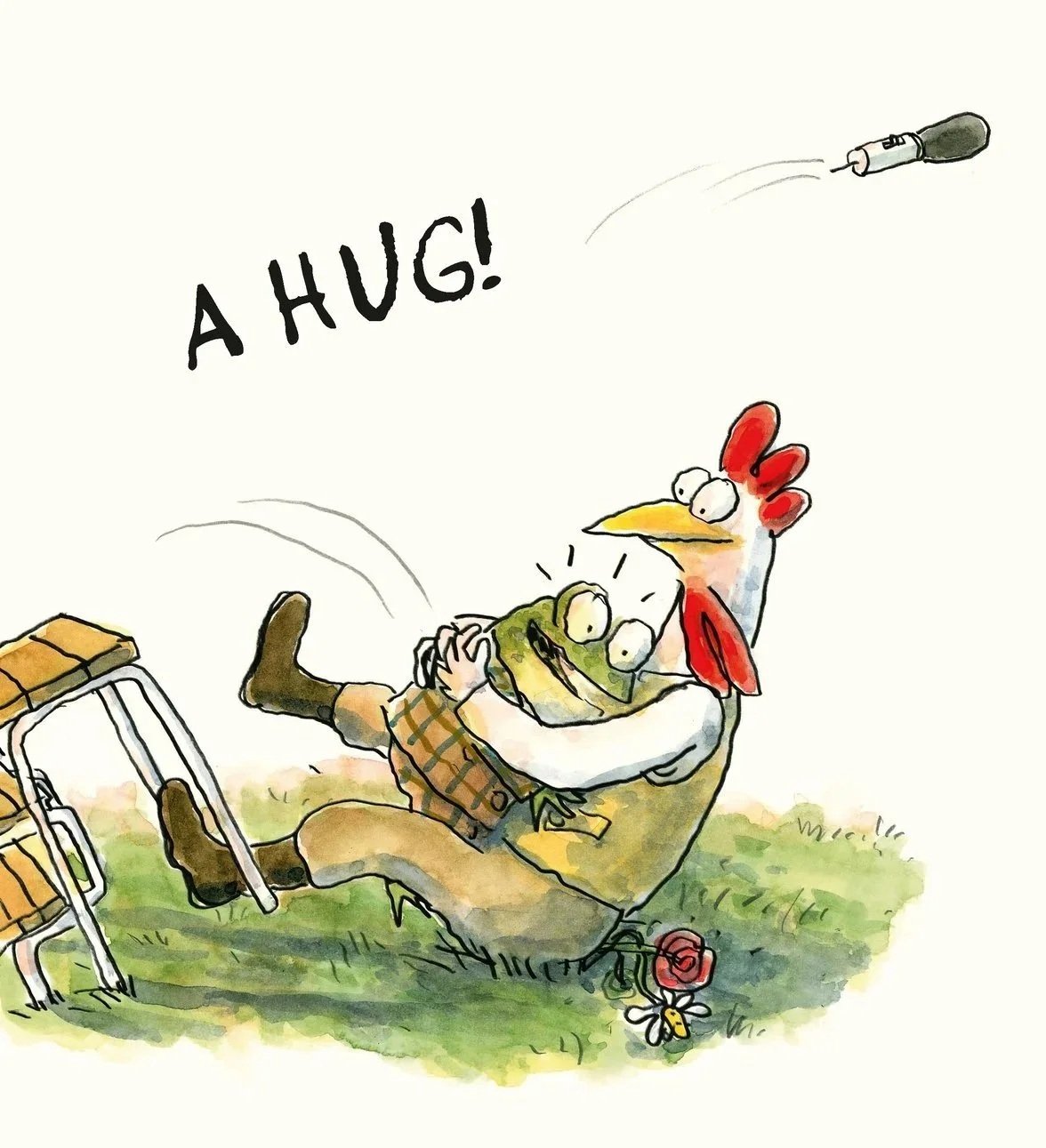
When Truman Toad—the most stubborn, perfectionist toad in Green Grove—wakes up one morning from a dream about the perfect hug, he knows exactly what he must do: find whoever is holding the other half.
With a charmingly witty text by author Oren Lavie and playful illustrations by beloved artist Anke Kuhl, Truman Toad and the Quest for the Perfect Hug is a delightful tale that reminds us that the best things in life will always take us by surprise!
ISBN: 978-1-59270-459-0
8.25” (W) x 11” (H) • 40 pages • Hardcover
Ages: 4-8
Publication Date: April 7, 2026
TRUMAN TOAD AND THE QUEST FOR THE PERFECT HUG
Written by Oren Lavie
Illustrated by Anke Kuhl
A self-important but good-hearted toad, with an ample amount of self-love, discovers his love for others in this entertaining and charming picture book!
When Truman Toad—the most stubborn, perfectionist toad in Green Grove—wakes up one morning from a dream about the perfect hug, he knows exactly what he must do: find whoever is holding the other half.
With a charmingly witty text by author Oren Lavie and playful illustrations by beloved artist Anke Kuhl, Truman Toad and the Quest for the Perfect Hug is a delightful tale that reminds us that the best things in life will always take us by surprise!
—
STARRED REVIEW! ★ "Kuhl’s visuals are an engrossing mix of William Steig’s and Arnold Lobel’s illustrations, with hijinks and hilarity." —Kirkus Reviews
STARRED REVIEW! ★ “Absolutely ribbiting… For anyone seeking their own perfect something, this irresistibly funny title hints, the answer may lie in embracing imperfection.” —Publishers Weekly
"I just love everything about this book SO much!" —Betsy Bird, A Fuse #8 Production (A School Library Journal blog)